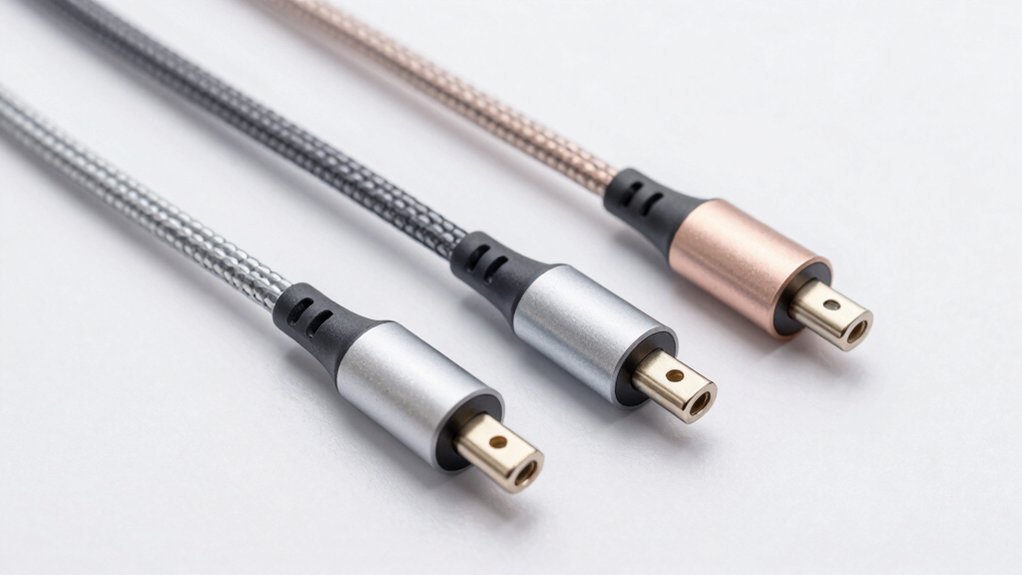
You’re constantly pushing your phone to its limits, and you can’t afford slow charging when you’re on set or between shoots. Finding the right cable means understanding what separates a reliable workhorse from one that’ll fail you mid-project. Let’s explore what makes certain fast-charging cables worth your investment and which ones genuinely deliver.
| SMALLRIG USB-C Male to Female Data Cable (5078) |  | Professional Mount Solution | Power Delivery: 240W (USB PD 3.1) | Data Transfer Speed: 20Gbps (USB 3.2 Gen 2×2) | Connector Type: USB-C Male to Female | CHECK ON AMAZON | Read Our Analysis |
| TetherPro USB-C Cable 15ft High-Visibility Orange |  | Extended Distance Tethering | Power Delivery: 60W | Data Transfer Speed: 5Gbps (Gen 1) | Connector Type: USB-C to USB-C | CHECK ON AMAZON | Read Our Analysis |
| TetherPro 10G USB-C to USB-C 3′ (1m) High-Visibility Orange 60W PD |  | Compact Professional Grade | Power Delivery: 60W | Data Transfer Speed: 10Gbps | Connector Type: USB-C to USB-C | CHECK ON AMAZON | Read Our Analysis |
More Details on Our Top Picks
SMALLRIG USB-C Male to Female Data Cable (5078)
If you’re securing professional cameras or monitors in a cage setup, you’ll want a cable that won’t fail under pressure. The SMALLRIG USB-C Male to Female Data Cable delivers exactly that. Its screw-fastened female connector, secured with two 1/4-20 stainless steel screws, prevents accidental disconnections while repositioning your USB-C port to minimize strain. You’ll get ultra-fast 20Gbps data transfer and 240W power delivery, backed by full backward compatibility across USB and PD standards. The shielded connector integrates seamlessly into existing SmallRig cage setups, protecting your port from impacts and tugging. Installation’s straightforward—everything you need comes included.
- Power Delivery:240W (USB PD 3.1)
- Data Transfer Speed:20Gbps (USB 3.2 Gen 2×2)
- Connector Type:USB-C Male to Female
- Cable Length:Not specified
- Shielding & Protection:Shielded connector with screw-fastened security
- Color:Not specified
- Additional Feature:Screw-fastened secure mounting
- Additional Feature:Reposition port strain relief
- Additional Feature:240W high-power delivery
TetherPro USB-C Cable 15ft High-Visibility Orange
The TetherPro USB-C Cable 15ft High-Visibility Orange stands out for professionals who need reliable tethering during extended shoots. You’ll appreciate its 5Gbps Gen 1 data transfer speed and robust 60W power delivery, which keeps your camera connected over long distances without performance drops. The nickel-plated tips and gold-plated pins resist corrosion, while full shielding protects against signal interference. Its right-angle design routes easily through tight spaces on set, and the high-visibility orange color ensures you’ll quickly locate it among your gear. Built for DSLRs and mirrorless cameras, this 15-foot cable delivers the durability and consistency professionals demand.
- Power Delivery:60W
- Data Transfer Speed:5Gbps (Gen 1)
- Connector Type:USB-C to USB-C
- Cable Length:15 feet (4.6 meters)
- Shielding & Protection:Fully shielded with nickel-plated tips and gold-plated pins
- Color:High-Visibility Orange
- Additional Feature:15-foot extended cable length
- Additional Feature:Right-angle connector design
- Additional Feature:Professional tethering technology
TetherPro 10G USB-C to USB-C 3′ (1m) High-Visibility Orange 60W PD
For professional photographers and filmmakers who demand reliable performance on set, the TetherPro 10G USB-C to USB-C cable delivers the durability and speed you need to connect your camera to your computer without compromise. This 3-foot cable features 60W Power Delivery, enabling fast transfers while charging your devices simultaneously. The nickel-plated tips and gold-plated pins guarantee consistent, reliable conductivity across multiple uses. Its fully shielded construction protects against signal interference, while the sturdy inner layer resists damage from repeated handling. The high-visibility orange design keeps you from losing it on crowded sets. Whether you’re tethering a DSLR or mirrorless camera, this cable’s tough construction withstands professional demands.
- Power Delivery:60W
- Data Transfer Speed:10Gbps
- Connector Type:USB-C to USB-C
- Cable Length:3 feet (1 meter)
- Shielding & Protection:Fully shielded with nickel-plated tips and gold-plated pins
- Color:High-Visibility Orange
- Additional Feature:Compact 3-foot cable length
- Additional Feature:Gold plated connector pins
- Additional Feature:Fast professional tethering
Factors to Consider When Choosing Fast-Charging Cables for Keeping Your Phone Shoot-Ready
When you’re selecting a fast-charging cable to keep your phone shoot-ready, you’ll want to evaluate several critical factors that’ll directly impact your workflow and equipment reliability. You should consider power delivery wattage to match your device’s charging needs, cable length for on-set flexibility, data transfer speeds for quick file offloading, durability to withstand field conditions, and connector type compatibility with your gear. Each of these elements plays an essential role in ensuring you’ve got a dependable charging solution that won’t let you down during critical moments.
Power Delivery Wattage Matters
Why does wattage matter so much when you’re choosing a fast-charging cable? Because your phone’s charging speed depends entirely on whether your cable, charger, and device work together at matching power levels. If your cable can’t handle the wattage your charger delivers, you’ll experience slow charging or heat buildup that damages components.
USB Power Delivery specifications range from 60W for typical phones to 240W for power-hungry equipment. You’ll want a cable rated for your specific needs—undersized cables bottleneck performance and create safety risks. For on-location shoots, a high-capacity PD setup keeps your phone powered longer without multiple power bricks, maximizing your shooting time between charges.
Cable Length For Flexibility
How do you balance reach against practicality on set? Cable length directly impacts your shooting flexibility and workflow efficiency.
Longer cables—around 15 feet—let you position your phone away from power sources, keeping your shooting area uncluttered. However, they add weight and bulk, complicating portability during rapid camera changes.
Shorter cables, roughly 3 feet, minimize signal loss and provide reliable connections in tight studio spaces, though they limit your positioning freedom.
The key’s matching your cable length to your shooting environment. Consider your typical setup: do you need distance from power outlets, or are you working in confined spaces? Also guarantee your chosen length maintains acceptable power delivery and data performance for fast-charging demands.
Data Transfer Speed Requirements
Beyond cable length, data transfer speed becomes your next critical consideration—especially if you’re moving RAW footage or large files between your phone, cameras, and computers on set.
You’ll want cables supporting USB 3.2 Gen 2×2 at 20 Gbps for high-volume transfers, which minimizes downtime between shoots. If you’re frequently handling RAW video or ProRes files, prioritize speeds around 10–20 Gbps to keep transfer windows short and manageable.
Standard USB-C Gen 1 cables maxing out at 5 Gbps can bottleneck your 4K or 6K workflows during multi-file transfers. For on-location tethering and live monitoring, guarantee robust shielding prevents data errors during sustained high-speed performance. Pairing fast data speeds with adequate power delivery—60–240 W—keeps your devices charged while offloading large data blocks efficiently.
Durability Under Field Conditions
When you’re shooting on location, your fast-charging cable faces constant wear—repeated plugging and unplugging, coiling and uncoiling, exposure to dust and moisture, and the occasional accidental step or snag. You’ll want a cable that withstands this punishment.
Look for nickel-plated tips and gold-plated pins that resist corrosion and reduce wear through countless connection cycles. A sturdy inner layer protects against bending, crushing, and abrasion during transport and on-set use. Fully shielded construction defends your cable from external signal interference, keeping your charge consistent even in challenging field environments.
Right-angle connector designs minimize strain and allow safer routing through tight camera rigs. High-visibility coloring helps you quickly locate your cable and prevents accidental damage during hectic outdoor shoots.
Connector Type Compatibility Check
What matters most when selecting a fast-charging cable? Connector type compatibility. You’ll need to verify that both your device and charger use USB-C connectors and support the same charging standard, like USB Power Delivery, for best speed.
Before purchasing, check your device’s charging port. Most modern phones feature USB-C, but some older models still use proprietary connectors. Confirm whether you need USB-C to USB-C, USB-C to USB-A, or another configuration entirely.
Additionally, guarantee your cable supports your device’s power requirements. A 60W-rated cable handles demanding charging scenarios better than lower-rated alternatives. Mismatched connectors won’t just slow your charging—they can damage your equipment or prevent connection altogether. Getting this right eliminates compatibility headaches on set.
Shielding Against Signal Interference
While connector compatibility keeps your devices physically connected, shielding protects the integrity of the data and power flowing through your cable. You’ll want fully shielded designs with plated connectors to prevent signal leakage and cross-talk during high-speed data transmissions. Plated pins and shielded housings maintain consistent conductivity despite environmental noise, which becomes critical during long cable runs.
When you’re tethering cameras or working in electromagnetically noisy locations, shielding effectiveness directly impacts your charging speed and data transfer reliability. External electromagnetic interference can degrade performance, so investing in properly shielded cables preserves fast transfer speeds and keeps your phone shoot-ready. Quality shielding guarantees your cable performs consistently regardless of surrounding interference.
Portability And Weight Considerations
How much weight you’re willing to carry matters when you’re shooting on location. Extended cables up to 15 feet add bulk that fatigues your hands during long shoots, so you’ll want a sleek, lightweight profile that minimizes strain.
Right-angle connectors help you route cables through tight camera rigs, reducing the space they consume in your bag. This design choice matters when you’re managing multiple accessories on set.
High-visibility colored cables deserve consideration too. You’ll locate them quickly in crowded gear setups, improving your on-site efficiency when you’re working fast.
Fully shielded, plated construction delivers durability without adding significant weight. You’re getting protection in demanding environments without sacrificing portability—a practical balance for location work.
Professional-Grade Build Quality Standards
Beyond portability, your cables need to withstand the rigors of professional shooting environments. You’ll want rugged, fully shielded construction with nickel-plated tips and gold-plated pins that resist interference and wear during constant use. Secure strain relief and screw-fastened connectors prevent disconnections when you’re moving between locations. Look for USB-C to USB-C cables supporting USB PD 3.x for safe, high-power delivery—essential when charging multiple devices simultaneously on set. Durable inner layers and protective housing handle repeated bending, twisting, and storage without degradation. Professional-grade specs like high-speed data transfer (Gen 2×2/10G) guarantee reliable performance across your equipment. These standards aren’t luxuries; they’re necessities for maintaining shoot continuity and protecting your devices.
Frequently Asked Questions
What’s the Difference Between USB-C and Lightning Cables for Fast Charging?
You’ll find that USB-C supports higher wattage charging, reaching up to 240W, while Lightning cables max out around 27W. USB-C’s reversible design and universal compatibility give you more device flexibility than Lightning’s Apple-exclusive standard.
How Long Do Fast-Charging Cables Typically Last Before Needing Replacement?
You’ll typically get 1-2 years of regular use from fast-charging cables before they degrade. You can extend their lifespan by avoiding extreme bending, heat exposure, and wrapping them loosely. Replace yours when you notice fraying or charging slowdowns.
Are Expensive Premium Cables Worth Buying Compared to Budget Alternatives?
You’ll find premium cables offer better durability and faster charging speeds, but budget alternatives work fine if you’re careful. You’re paying extra for longevity and reliability, so choose based on your usage habits.
Can Using Third-Party Cables Damage My Phone’s Battery or Charging Port?
You risk damaging your phone’s battery and charging port when you use third-party cables lacking proper certification. They’ll overheat, degrade your battery faster, and potentially harm internal components permanently.
Which Fast-Charging Cable Works Best With Specific Phone Brands Like iPhone?
You’ll want to use Apple’s official Lightning or USB-C cables for iPhones to guarantee best charging speeds. You can also trust MFi-certified third-party options that meet Apple’s strict standards for safety and performance.

Leave a Reply