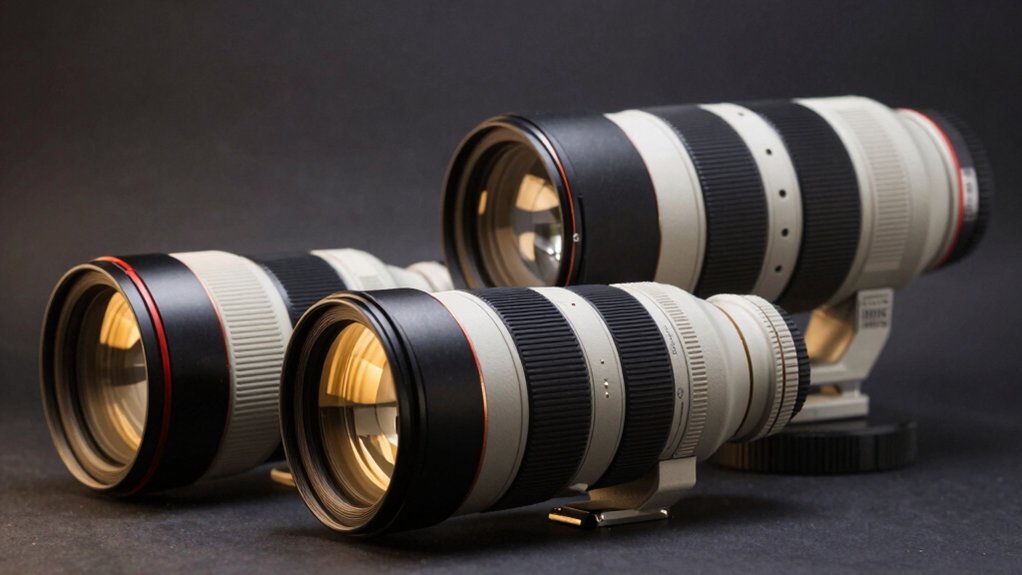
You’re shopping for a telephoto lens in 2026, but you’ve hit a wall. Should you invest in a professional-grade Canon or Nikon? Or does Sony’s lightweight option make more sense? The choice isn’t straightforward—each lens demands different trade-offs. Before you commit your budget, you’ll want to understand what actually separates the top performers.
| Evil Eye 18X Telephoto Lens for Smartphones | Best Versatile Option | Magnification Power: 18X telephoto | Optical Quality: BAK4 prisms, FMC glass | Attachment Type: Universal detachable clamps | CHECK ON AMAZON | Read Our Analysis | |
| APEXEL 10X Tele-Macro Pro Dual Lens Smartphone |  | Best Dual Functionality | Magnification Power: 10X telephoto | Optical Quality: 12-element optical structure, multi-layer coating | Attachment Type: Universal clip-on design | CHECK ON AMAZON | Read Our Analysis |
| Phone Camera Lens Kit Telephoto Wide Angle Macro | Best All-in-One Kit | Magnification Power: 28X telephoto | Optical Quality: Multiple optical structures, vacuum multi-layer coating | Attachment Type: Clip-on attachment | CHECK ON AMAZON | Read Our Analysis | |
| NEEWER 58mm Telephoto Lens Phone Camera Clip (LS-71) | 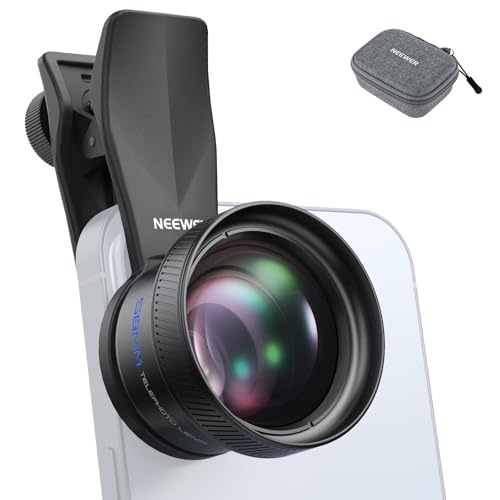 | Best Compact Choice | Magnification Power: 2X telephoto | Optical Quality: 6 elements in 5 groups, HD optical glass | Attachment Type: 17mm threaded clip | CHECK ON AMAZON | Read Our Analysis |
| APEXEL 36x Telephoto Lens for iPhone & Samsung | Best Professional Grade | Magnification Power: 36X telephoto | Optical Quality: Pro-grade optical glass | Attachment Type: Universal clip-on design | CHECK ON AMAZON | Read Our Analysis |
More Details on Our Top Picks
Evil Eye 18X Telephoto Lens for Smartphones
The Evil Eye 18X Telephoto Lens is your go-to choice if you’re looking to capture distant subjects without sacrificing image quality. You’ll appreciate its BAK4 prisms and FMC glass, which deliver vibrant colors with minimal distortion and sharp edges. At just 120g, this compact lens fits easily in your pocket or bag. The adjustable twist focus ring lets you dial in clarity on whatever you’re viewing. You can use it as a smartphone attachment or standalone monocular with the included eyecup. The aluminum tripod provides stable, hands-free shooting for sports, wildlife, astronomy, or travel photography. Universal clamps accommodate most phones up to 0.98 inches thick.
- Magnification Power:18X telephoto
- Optical Quality:BAK4 prisms, FMC glass
- Attachment Type:Universal detachable clamps
- Weight/Portability:120g, compact, easy carry
- Primary Use Cases:Camping, sports, moon watching, bird watching, fishing, hiking, golf, concerts, travel
- Smartphone Compatibility:iPhone, Samsung Galaxy/Note, Google Pixel, Huawei, OnePlus, most smartphones
- Additional Feature:Dual-mode naked-eye monocular
- Additional Feature:Included aluminum alloy tripod
- Additional Feature:Storage bag with compact design
APEXEL 10X Tele-Macro Pro Dual Lens Smartphone
If you’re a content creator or photography enthusiast who wants to push beyond your smartphone’s built-in camera capabilities, the APEXEL 10X Tele-Macro Pro delivers dual functionality in a lightweight, pocketable package. This 2-in-1 clip-on lens combines 10X telephoto and 10X macro capabilities, letting you capture everything from distant landscapes to micro details as close as 1mm. The 12-element optical structure with multi-layer coating minimizes glare and distortion while delivering sharper, more vibrant images. Its universal design attaches to virtually any smartphone without tools, making it ideal for travel, concerts, and exploration. Weighing just 5.12 ounces, you’ll barely notice it in your pocket.
- Magnification Power:10X telephoto
- Optical Quality:12-element optical structure, multi-layer coating
- Attachment Type:Universal clip-on design
- Weight/Portability:5.12 oz, lightweight, pocketable
- Primary Use Cases:Landscapes, close-ups, micro details, concerts, travel, exploration
- Smartphone Compatibility:iPhone, Samsung, almost all smartphones
- Additional Feature:10X macro focus 1mm
- Additional Feature:Tool-free quick attachment design
- Additional Feature:2-in-1 telephoto macro combo
Phone Camera Lens Kit Telephoto Wide Angle Macro
For photography hobbyists and enthusiasts seeking to transform their mobile device into a professional-grade camera, this 4-in-1 HD phone camera lens kit delivers the versatility you’ll need. You’ll gain access to a 28x telephoto lens that magnifies distant subjects, a 198° fisheye lens with exceptional edge clarity, a 20x macro lens revealing intricate details from 1–2 mm away, and a 0.6x wide-angle option. The telephoto performs best when you’re stabilizing your phone with a tripod, making it ideal for concerts and wildlife. You can combine the macro and wide-angle lenses for expanded creative possibilities, though you should verify compatibility with your device’s camera configuration beforehand.
- Magnification Power:28X telephoto
- Optical Quality:Multiple optical structures, vacuum multi-layer coating
- Attachment Type:Clip-on attachment
- Weight/Portability:Not specified
- Primary Use Cases:Concerts, birds, distant scenery, pets, architecture, portraits
- Smartphone Compatibility:Most smartphones (with compatibility notes)
- Additional Feature:4-in-1 comprehensive lens set
- Additional Feature:198° fisheye lens included
- Additional Feature:Macro/wide-angle screw combination feature
NEEWER 58mm Telephoto Lens Phone Camera Clip (LS-71)
Content creators and mobile photographers who want genuine 2X optical magnification without sacrificing image quality will find the NEEWER LS-71 invaluable. This 58mm telephoto lens features six elements in five groups of premium optical glass, delivering sharp portraits, wildlife shots, and landscapes with minimal distortion. The lightweight aluminum construction weighs just 4 ounces, making it portable for on-the-go shooting. You’ll appreciate the adjustable 17mm threaded clip that accommodates various devices, including iPhones and Samsung Galaxy phones. The package includes front and rear caps, a cleaning cloth, and carrying case. If vignetting appears, simply tighten the lens or set your camera zoom to 1.1x or higher.
- Magnification Power:2X telephoto
- Optical Quality:6 elements in 5 groups, HD optical glass
- Attachment Type:17mm threaded clip
- Weight/Portability:4 oz / 113g, lightweight
- Primary Use Cases:Portraits, wildlife, landscapes
- Smartphone Compatibility:iPhone series, Android, Samsung Galaxy, NEEWER mounting thread compatible
- Additional Feature:17mm threaded mounting system
- Additional Feature:6 elements in 5 groups
- Additional Feature:Premium multi-coated optical glass
APEXEL 36x Telephoto Lens for iPhone & Samsung
Photography enthusiasts who crave zoom capabilities without sacrificing image quality won’t find a better clip-on solution than the APEXEL 36x telephoto lens. You’ll capture distant subjects thousands of meters away with crystal-clear, true-to-life colors. The pro-grade optical glass and aircraft-grade aluminum construction minimize distortion while delivering professional-level resolution in a compact design. Whether you’re photographing wildlife, sports events, or concerts, this universal clip-on attaches to iPhone 16/15/14/13/12 Pro models, Samsung, Google Pixel, and most smartphones. Its exceptional 36x magnification makes it an outstanding gift for photographers, combining durability suitable for both amateurs and professionals with outstanding performance.
- Magnification Power:36X telephoto
- Optical Quality:Pro-grade optical glass
- Attachment Type:Universal clip-on design
- Weight/Portability:Compact design
- Primary Use Cases:Wildlife, sports, camping, bird watching, concerts, hiking, travel
- Smartphone Compatibility:iPhone 16/15/14/13/12 Pro, Samsung, Google Pixel, most smartphones
- Additional Feature:Aircraft-grade aluminum construction
- Additional Feature:Pro-grade optics telephoto lens
- Additional Feature:Crystal-clear long-range zoom capability
Factors to Consider When Choosing Telephoto Lenses for Zooming in Without Losing Quality
When you’re choosing a telephoto lens, you’ll want to prioritize optical quality since it directly impacts how sharp your zoomed images appear. You’ll need to balance magnification power against image clarity, because higher zoom doesn’t always guarantee better photos—and you should investigate lens coating technology, which reduces glare and enhances color accuracy. Finally, consider the weight and portability of your lens alongside its universal compatibility with your smartphone, since you won’t use a telephoto that’s too cumbersome to carry or incompatible with your device.
Optical Quality Matters Most
Why does optical quality matter more than anything else when you’re choosing a telephoto lens? Because it directly determines whether you’ll preserve detail or sacrifice clarity at high magnification.
You’ll want fully multi-coated glass and BAK4 prisms that minimize glare and maximize light transmission. A multi-element optical design—at least 12 elements across multiple groups—reduces distortions and keeps edges sharp across your entire frame.
Precision coatings and thoughtful lens arrangements lower diffraction and aberrations, maintaining accurate color reproduction as you zoom. When you’re shooting at long focal lengths, quality optics keep details intact and prevent that frustrating softness that ruins telephoto shots.
Invest in superior coatings, more lens elements, and premium materials. You’ll gain the contrast and color fidelity that separates exceptional telephoto performance from mediocre zoom capability.
Magnification Vs. Image Clarity
Now that you’ve built your foundation with premium optics, you’ll face the real challenge: balancing magnification against image clarity. Higher magnifications like 28x–36x reveal distant details, but they demand sharper stabilization and superior optics to maintain edge-to-edge sharpness. Multi-layer coatings, BAK4 prisms, and multiple lens elements preserve contrast and reduce glare as you zoom in. Even minor camera shake becomes magnified at extreme powers, making tripods essential for sharp shots. You can combine close-focusing macro capabilities with long focal-length magnification, though you’ll need precise focusing routines. Aluminum and aircraft-grade bodies reduce distortion and flare, protecting image quality when pushing magnification to its limits.
Lens Coating Technology Benefits
The optical coatings on your telephoto lens surfaces directly determine how much light reaches your camera’s sensor and how clearly that light transmits through the glass. Full multi-coated (FMC) surfaces minimize reflections across multiple wavelengths, substantially boosting light transmission to your camera.
These multi-layer coatings reduce glare and lens flare, which sharpen contrast even in challenging lighting conditions. You’ll notice improved color accuracy since coatings prevent color shifts caused by internal reflections. At longer focal lengths, reduced internal reflections deliver sharper edge detail and eliminate image hazing that typically plagues telephoto performance.
Beyond optical benefits, durable coatings enhance your lens’s resistance to moisture and fingerprints, preserving image quality throughout your lens’s lifespan. Quality coatings represent essential protection for your investment.
Weight And Portability Trade-offs
While optical coatings guarantee light reaches your sensor with clarity, you’ll quickly discover that what you gain in image quality often comes at a weight cost. Lighter telephoto lenses around 100–150 grams maximize portability but may compromise edge sharpness and glare control compared to heavier designs.
Heavier adapters offer more robust construction and better stabilization, yet reduce handheld convenience. You’ll also need tripods or stable mounts for longer focal lengths, adding bulk that offsets portability gains.
Weight distribution considerably impacts usability—lenses with offset centers or bulky clamps feel unbalanced on phones during extended shoots. When choosing telephoto lenses, weigh the stability and optical quality that extra mass provides against reduced on-the-go convenience. Your specific shooting style determines which trade-off suits you best.
Universal Smartphone Compatibility Requirements
How compatible is your phone with clip-on telephoto lenses? You’ll need a device no thicker than 0.98 inches to secure most universal clips properly. If your phone’s too thick or you’re using a protective case, the lens won’t grip securely.
Alignment proves critical for functionality. The lens center typically sits 1.38 inches from the clip’s top, positioning it to match your phone’s main camera. This matters greatly because phones with multiple camera modules can trigger automatic lens switching, degrading image quality when the telephoto activates the wrong lens.
Check your phone’s dimensions and camera configuration before purchasing. Some designs use 17mm threaded mounts requiring compatible adapters. Understanding these compatibility requirements guarantees you’ll actually use the telephoto lens effectively rather than discovering frustrating limitations after purchase.
Tripod Stability For Zoom
Once you’ve secured your telephoto lens to your phone, you’ll discover that mounting stability becomes your next challenge. A sturdy tripod with a stable base and leveled head dramatically reduces image shake when zooming. You’ll want a heavier-duty model with counterweights rather than lightweight alternatives, as long-telephoto setups demand superior support.
Ensure your quick-release plate fastens securely and your clamps tighten completely to prevent sudden movements during framing adjustments at high magnification. Keep the tripod head and center column as low as possible while maintaining a level setup—this minimizes vibrations that amplify at longer focal lengths.
Finally, use a remote shutter release or timer instead of pressing the button manually. This eliminates the camera shake your hand inevitably introduces, delivering sharper images every time.
Real-World Usage Scenarios
Where you’ll actually use your telephoto lens matters just as much as the equipment itself. You’re photographing wildlife from 50–200 meters away, so you’ll need a tripod to eliminate shake and preserve edge detail. If you’re shooting sports or events 20–100 meters distant, stable high-magnification views keep your subjects sharp. For landscapes and architecture, precise color reproduction and minimal distortion guarantee true-to-life results across cityscapes or mountains. Night photography of celestial subjects demands stable framing with remote or timer triggers to reduce vibrations. Street photography requires moderate magnification and careful framing to isolate subjects while avoiding compression. Your specific scenario determines which telephoto focal length, stabilization features, and supporting gear you’ll actually need.
Frequently Asked Questions
How Do Telephoto Lenses Affect Smartphone Battery Life and Overall Device Performance?
You’ll drain your battery faster when using telephoto lenses because they demand more processing power and longer exposure times. Your device works harder to stabilize images and process digital zoom, which strains your CPU and GPU substantially.
Are Telephoto Lenses Compatible With Phone Cases and Protective Covers?
You’ll find most telephoto lenses compatible with phone cases, though you may need to remove thicker covers for best lens alignment. You should check your specific case’s cutout design before purchasing a lens attachment.
What’s the Difference Between Optical and Digital Zoom in Telephoto Lenses?
You’ll find that optical zoom physically moves your lens elements to magnify distant subjects, preserving image quality. Digital zoom, however, crops and enlarges pixels electronically, degrading sharpness. You’ll want optical zoom for superior results.
Do Telephoto Lenses Work Effectively in Low Light Conditions or at Night?
You’ll find that telephoto lenses work in low light, but you’ll need a wider aperture and higher ISO settings. You’re limited by the lens’s light-gathering ability, so you’ll struggle more than with standard lenses at night.
How Should I Properly Clean and Maintain My Telephoto Lens for Longevity?
You’ll protect your telephoto lens by regularly cleaning the front element with a soft brush and microfiber cloth. Store it in a dry case, avoid touching internal glass, and use lens caps always. Check seals quarterly for dust infiltration.

Leave a Reply